Understanding Pipe Fittings: A Comprehensive Guide for Oil & Gas Applications
Introduction to Pipe Fittings
Pipe fittings are essential components in piping systems that connect, control, and alter the direction of fluid flow. In demanding industries like oil & gas, chemical processing, and power generation, selecting the right fitting type, material, and pressure class can mean the difference between reliable operation and costly failures.
Common Types of Pipe Fittings
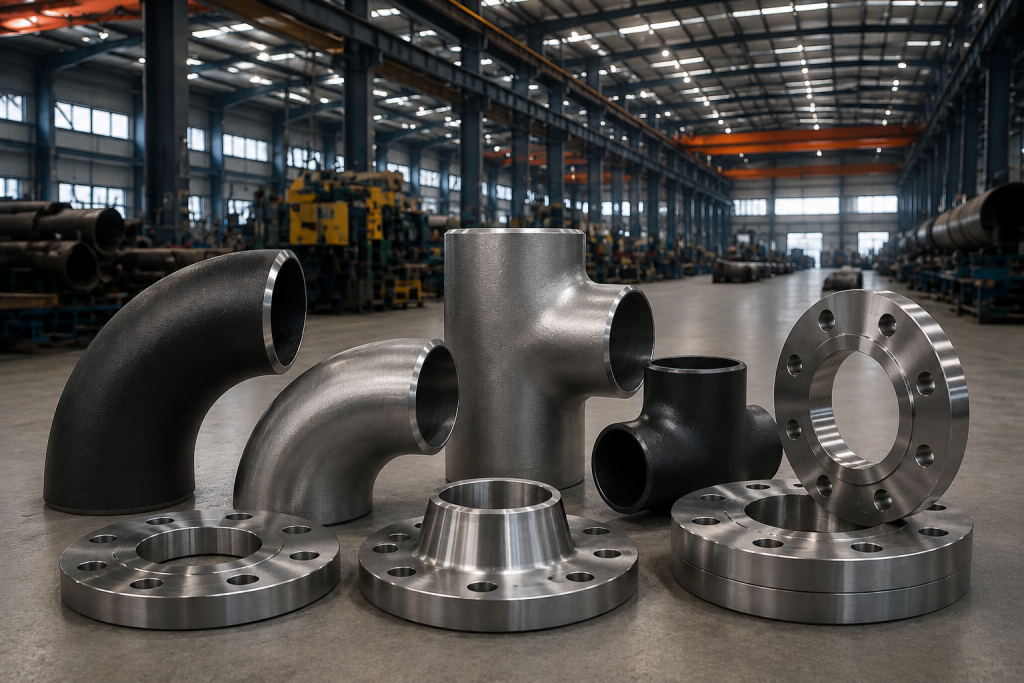
- الأكواع - Change the direction of piping runs (45° and 90° available, LR and SR)
- الوصلات على شكل حرف T - Create branch connections (Equal and Reducing types)
- المخفضات - Transition between different pipe sizes (Concentric and Eccentric)
- الشفاه - Create removable joints (Weld Neck, Slip-On, Blind, Socket Weld)
- أغطية الأنابيب - Seal the ends of pipes
Material Selection Matters
For oil & gas service, material grade selection is critical. Carbon steel (A234 WPB) works well for general service, while stainless steel (A403 WP316L) is preferred for corrosive environments. High-temperature applications call for alloy steel grades (A234 WP5, WP9, WP11, WP22).
Quality Standards
Look for fittings manufactured to ASME B16.9 (butt-weld fittings) and ASME B16.5 (flanges). ISO 9001 certification ensures consistent quality control throughout production.
Need Help Selecting Fittings?
Our engineering team responds within 24 hours with technical recommendations and competitive pricing. Request a Quote